
When will AI (artificial intelligence) take our jobs. Technology Futurist and AI Employment Researcher Adam Dorr says it might be much sooner than you think. We talk how AI will affect the job market in 2026, why politicians are lying to you about AI and the one thing that will guarantee you a job.
Then, it’s knee pain vs. collecting coupons as we countdown the Top 5 Signs You’re Getting Old.
Adam Dorr: 01:17
Pointless:: 29:14
Top 5 Signs You’re Getting Older: 56:46
Adam Dorr Books: Brighter, The Degrowth Delusion and More than the Sun and Stars
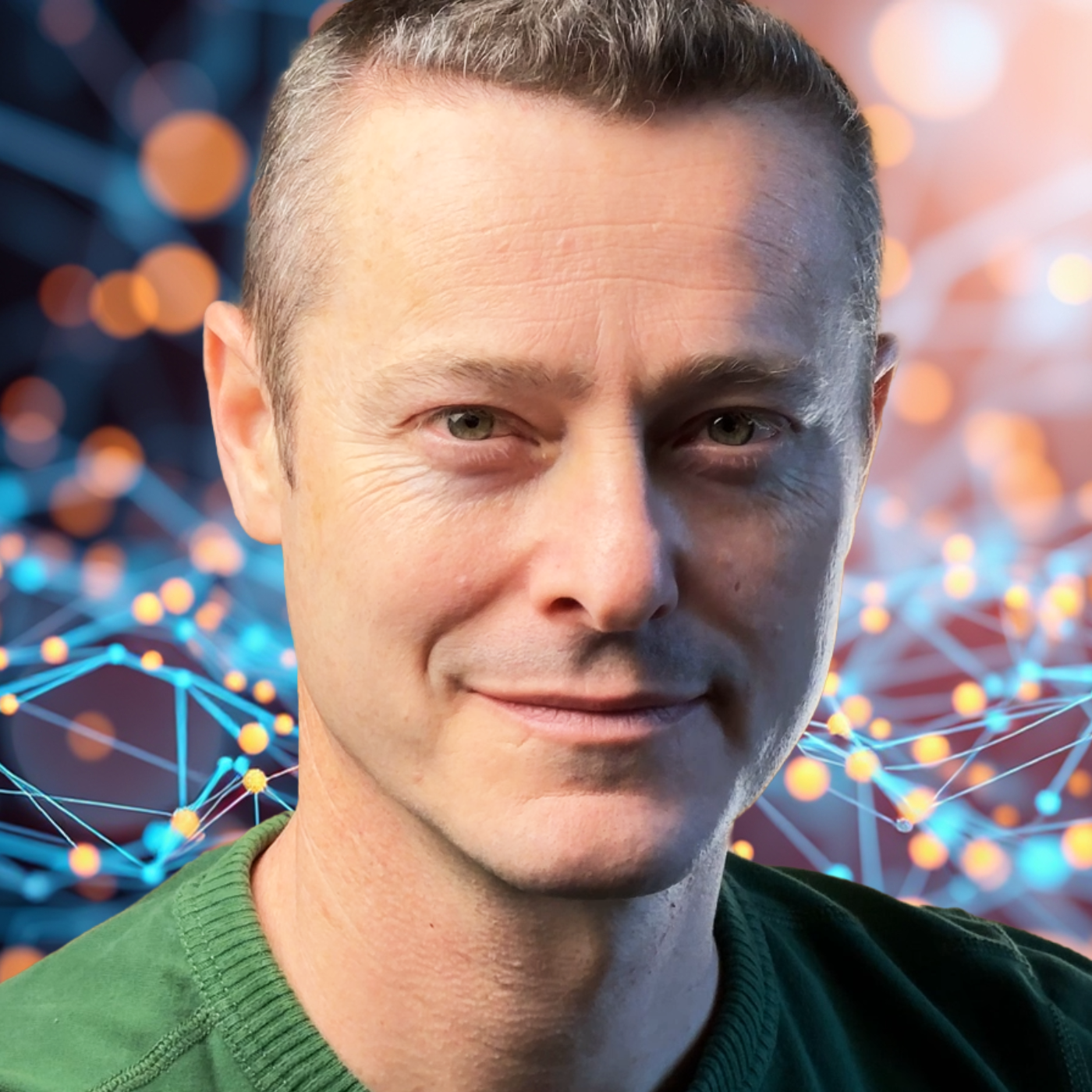
Interview with Futurist Adam Door
Nick VinZant 0:12
Nick, welcome to profoundly pointless. My name is Nick VinZant, coming up in this episode, the future of AI and signs you're getting older,
Adam Dorr 0:23
if AI keeps going on this rocket ship, there's really no there's no plausible way in which the machines don't out compete us. The more powerful the tool, the more extreme the benefits and the harms could potentially be. Since this is perhaps the most powerful tool ever. So that's my my team, my personal team's assessment is we have somewhere between two and five years, something like that, before we really are in the thick of this.
Nick VinZant 0:56
I want to thank you so much for joining us. If you get a chance subscribe, leave us a rating or review. We really appreciate. It really helps us out. So I want to get right to our first guest, because he is a futurist who studies the impact of AI on employment. This is futurist, Adam Dorr, when we look at 2026, and the immediate future. What changes do you see coming?
Adam Dorr 1:24
The big elephant in the room, overhanging everything else is AI. This is just, it's a rocket ship that we're on, and it's one of those things where even even with all the hype, it still deserves that hype. All of the key properties that we see, costs improving dramatically, capabilities improving dramatically. When you put those two things together with any new technology, you're going to see extremely rapid adoption of that new technology. But for now, I think 2026 is going to be, I think probably going to be the year where we really start seeing these capabilities affecting industries in a in a significant way. They're leaving the stage of being a gimmick, and they're entering the stage where they're actually, genuinely useful. And so I think this could be a breakout year for artificial intelligence. The thing
Nick VinZant 2:20
that I don't understand is, like, Okay, if AI replaces all the jobs, then what does everybody do? Right? Because if you replace the jobs, then nobody has money to buy the thing that like, how does that math?
Adam Dorr 2:35
Math? Yeah, that's, that's exactly the right question to ask. And the truth is, let me say this at the very beginning, nobody has an answer for that question. That's the proverbial $64 trillion question that civilization has to answer. Humanity has to answer this because we are moving into a new paradigm. My team is working on this. We're modeling it. We're simulating it. We're trying to find out whether, for example, proposals for a universal basic income, basically, you have a you in a democracy, you would agree that your Government provides money, provides currency as an income, a basic income to everybody so that they continue to have that purchasing power. We don't have all the answers yet, but the sense of urgency is there, and I'm optimistic a lot of people are thinking very seriously about this, but I have to say, most of that is behind the scenes. At the moment, there's a facade in front of us right now, if you listen to politicians in Washington, DC, or the CEOs of the big tech, giant companies, with one or two exceptions, they're mostly saying they're mostly singing the same tune. Don't worry about AI, don't worry about robots. It's still a long way off, and they're going to create more jobs for people than they're going to displace. That's the story we're getting right now. The truth is that that is a fiction in the longer term. That's a fiction on a sort of 15 to 20 year time horizon, if AI keeps going on this rocket ship, there's really no there's no plausible way in which the machines don't out compete us by around 2040 in pretty much every domain. So right now, we're being, sort of having the wool pulled over our eyes about the long term prospects of this a little bit in the short term. It's true the you know, not everybody's going to lose their job next year, but it's, it's a an illusion, a delusion, for our leaders to be telling us there's nothing to worry about here. There's nothing to see here. That's dishonest, I think, and the conversations I participate in behind closed doors with some of these folks, they're not, they're not under that illusion or delusion themselves. But I'm optimistic because I'll give you two reasons, fundamentally, why I'm optimistic about this, because I don't want to leave this on a leave that this question on it on a. Doom and gloom, disappointing, dismaying note, I'm super optimistic about this for two reasons. The first is energy, and the second is labor itself. Okay, what do I mean by that? The reason why anything, anything at all, any good and service you can name point to anything in your life, or anything in the supermarket or anything around us that's valuable, the reason why it has a price tag on it is because it took a significant amount of energy and a significant amount of someone's labor to put that thing together, to make it, to get it to you, to distribute it, to package it up, to get it in front of you, to deliver it into your life, and so that you can make use of it any good and services like that. And what I mean by that, and what we we say in economic terms is energy and labor are the fundamental factors of production. They go into making everything else. And what the great news is for being optimistic here is that as energy and labor become cheaper, so does absolutely everything else. As labor and energy become abundant, especially if they stay clean, which they will with today's technologies, everything else becomes abundant and available too. And what this means is that even if we, even if we lost our jobs because all of these robots and AIs are doing all of the work, the work still gets done. In fact, probably way more work gets done. And if machines can do 10 times as much work as humans ever could, that means 10 times as much goods and services are around. And in principle, that could translate into vastly greater abundance and prosperity that we could if we make good social choices together as a societies that we could distribute in fantastic ways. So what that means is, with these new technologies, our jobs are threatened, but abundance and prosperity could explode, and that's the prize that we have to keep our eyes on.
Nick VinZant 6:55
I'm going to apologize a little bit in advance, because I feel like I'm going to come after you, like you're personally responsible for the situation that's happening. But like, the idea that, Oh, we haven't solved or really come up with an answer for the fundamental problem we're about to create, that sounds really bad to me. Like, Oh, what's this landing on the bottom of the cliff? Like, well, we don't know, but we're going to jump anyway. Like, wait a minute, that sounds like a really bad idea. Should we have figured this out and then
Adam Dorr 7:26
done what we're going to the cliff, so to speak, absolutely. I mean, in any sensible, right, sensible world, absolutely, oh my gosh, and it's two, it's two problems, actually, the one is sort of the the nuts and bolts economics problem of, you know, job displacement, reorganizing society, labor markets, all of that jazz, that sort of, that sort of down to earth and and that's going to be such a huge thing, we should have figured it out in advance. Had we had the option, had the system's dynamics allowed for that, and unfortunately, it doesn't. The reason why is because we're in a we're in what we call arms race conditions, where the in order to capture this prize that the technology offers, or all of the benefits that it has to offer, it's a race to obtain that capability, that technology first, because we're worried about others beating us to the finish line, and when I say others, the main contest that we hear about in the AI domain is between Basically American technology companies with the government paying playing a supportive role, and China in the same sort of dynamic, with the Chinese government playing a larger role. And the thinking is it really matters who wins that race, and so we can't pause, we can't stop to get things figured out ahead of time. But then there is this other, this other major concern, which is a little more out into the stratosphere kind of thing, and that is the so called Terminator scenario, where we're worried that if we create powerful enough AI, then it could turn on humanity and be a threat to us. And shouldn't we figure out that, what's called the alignment problem. Shouldn't we make sure we know how to build these AI systems so that if one day they you know, they have this proverbial waking up moment they become they it they these systems, or the technology becomes powerful enough that that it ceases to be under humanity's control. Will that be a good thing or bad thing for us? Is it going to be amazing, because this is going to be a benevolent, you know, super intelligent system that can help us solve problems, or is it going to be the Terminator scenario and decide we're a nuisance to get rid of us? That's a real risk. I mean, I don't, I don't, fact, personally factor that. At risk as being enormously high, but it's not zero, and we haven't got that figured out before running this, this arms race, either. So yeah, this is not the way we would do it if we were perfectly rational. But we're in a we're in an arms race.
Nick VinZant 10:13
I mean, it seems to me, looking at it from afar, it's either great or terrible. Is that the future that we're looking at, that we're either looking at Heaven or we're looking at
Adam Dorr 10:24
Hell, the more powerful the tool, the more extreme the benefits and the harms could potentially be. Since this is perhaps the most powerful tool ever, then that means that the stark difference between the benefits and the harms that that tool could create are that's the most extreme one could imagine as well. And then, of course, that translates into very, very high stakes of getting this right, which also then gets back to your question of, if the stakes are so high, why don't we stop to figure this out a little better to begin with, and again, we're back in this catch 22 of the arms race. It's the
Nick VinZant 11:04
rock and the hard place. Is there any push, universally or worldwide, to just say, You know what? Everybody stop? Maybe we shouldn't do this. Yeah.
Adam Dorr 11:17
A couple of years ago, there was a call from the technology community with policymaker support in Washington to to to structure this a little better. Slow things down is maybe, well, there was a letter that was had a very large number of prominent signatories from the technology community that circulated that was calling for a slowdown or a pause on a to i development again, to answer these, these very, very, you know, enormously important high stakes questions. And there was an attempt to slow things down on the regulatory side, or at least get things a little a little more narrowly guard railed than they otherwise would have been, unfortunately, or, you know, for better or worse, depending on how you look at it, within these arms race conditions around the world that that slow down did not take so we've there have been some efforts on that front, but those efforts were overwhelmed by this competitive pressure to stay in the lead in this race.
Nick VinZant 12:26
How does that work? Necessarily, when I would imagine that AI would potentially be replacing certain kinds of jobs first and other kinds of jobs later, where you kind of have half of the population that is suddenly unemployable, and the other half is like, Well, I still got a job, so I'm not doing that. Like, is this the kind of thing that you think is going to have no matter how, how it goes a very rough patch?
Adam Dorr 12:54
I was absolutely guilty of assuming that AI would AI would put the unskilled labor at risk first, and the skilled labor, human skilled labor, would be safer for longer, not forever, but for longer. And what we've seen is actually, if not the total reverse of that, then it at the very least, it's more it's more even, but it looks more like it's going to be the reverse, for example. It surprised many of us that AI was able to so quickly generate art and images, for example. So that's been a surprise, and it it could be that we have a little bit of breathing room for for a couple of esoteric reasons. I'll just mention one, because we don't need to get too far down into the technical weeds here. I don't think, but the but the when robots start marching out of the factories that are that are developing them, developing them in a break neck pace, especially in the US and in China, when they start coming out of these factories and being put to use, they're not going to be able to put, you know, a a experienced plumber, out of work on day one. They're not even, they're barely going to be able to fold laundry on day one. But what they are going to be able to do, or a lot of the little things that are, that are a nuisance, or that would be, that would be frustrating for a human to do, and that you wouldn't pay a person to do, because it wouldn't be worth it, but that nevertheless would still be nice to get done. And what we call this in in the in economics jargon, is latent demand for labor. What that means is that there's all sorts of work that we would love to get done. If we look around the world just picking up the trash that's around us on the street or something, but, but it's, it's, it is for whatever reason, we don't pay minimum wage or higher for that work to get done, and so the work doesn't get done. But the work. Could get done if someone were willing to do it cheaply, cheaply enough. Now, it would be immoral. It would be wrong. It would be inhumane to have a person work for $1 an hour picking up trash. But robots, sure? Why not? Now, that's just one example, but there may be a large number, hundreds, 1000s of things like that across the economy and throughout our society, uses for these machines that we can put them to before they displace the entire career, the entire job description, all of the tasks that say, for example, a plumber or an electrician or a physician or architect or a scientist does, and that may give us some runway for a soft landing, rather than just smashing into the into the crowd after we jump off the cliff kind of thing.
Nick VinZant 15:54
Well, that's the thing, right? Like it ultimately has to be a soft landing, because if not, then the people revolt to be really dramatic, and then we ban it all out, right, right? Like, you kind of have to have a soft landing at some point that goes through. There. Is there any, when you kind of look geographically speaking, are there areas of the world that like, Oh, they're really going to benefit from this first,
Adam Dorr 16:18
there are places that are have have energy advantages, and energy factors into AI, energy factors into robots. So if you have very, very abundant energy, then it's going to be more feasible to run huge AI data centers, many of them, and huge fleets of hundreds of 1000s, millions or more robots, because those are going to use a lot of electricity for those two things, AI, and robots are going to use a lot of electricity. In case you're wondering why China is, is, is, you know, building enough solar panels that it's basically enough to power the United States. They're doing that every, every two or three years at this point, the rate they're building solar, it's unbelievable. The build out. That is the reason why they're anticipating that need, that demand for all of that electricity. Who adopts these technologies first, and how successfully they onboard them? And what my team believes is that it's unlikely, it's unlikely, for the winners of that process to be the entrenched leaders in today's status quo, what we call the incumbent centers of power and influence today. And the reason why is because wherever the status quo works the best today, there's going to be the most resistance to any change to it right? And so what we see throughout history is that it's often out on the edges of power and that incumbency that new technologies are embraced and utilized, and then a new center of leadership springs out of that. And that we see that over and over and over again. So, for example, it wasn't just in recent memory. It wasn't Washington, DC, where the internet and the computer and the digital revolution all took root and emerged. And it wasn't in Manhattan, and it wasn't in in, you know, Los Angeles and these other massive centers it was, it was Silicon Valley, which in the 1970s and 1980s was sort of a out on the edges of things. It wasn't right at the center of power of the status quo in the 1970s and 1980s that's just one recent example in living memory. So I think we're likely to see something similar,
Nick VinZant 18:37
how long in your mind and right? Like just thrown out a prediction in the sense, how long do we go from kind of the difficult period to the paradise period? In the sense, we're like, okay, it's taking jobs. It's starting to get going. People are starting to get hit by it, so to speak. How long do we go from kind of that period to where it can no now we're in prosperity. Like, how soft of a soft landing do we need to have? Like, how, what's the time? Does this make sense? What I'm asking, I think I'm sure, well, not saying it very well, but I think you get what I'm saying. Like, how long do we go? Like, how long do we have to go through hell to get to heaven?
Adam Dorr 19:15
I would be very surprised if the story weren't mostly told by 2045, 20 years from now, the at the other end, how fast could it go? Well, this is where the past isn't that great of a guide things. Things didn't change as fast in 1525 the year 1525 as they do in the year 2025, and it was a different it was a different world. And now information and everything else moves at the speed of lighter, basically. And so it's, it's just, it's things can happen faster. So what would be about the most rapid that we would sort of be in the thick of this transformation and really need to be having our arms around this thing? It could be. Within five years, I would be very surprised if we're sort of seeing radical impacts of job displacement and total upheaval of our economic circumstances that are requiring really dramatic action from our governments. I would be surprised if that we were in the thick of that before the end of 2027 so two years from now, but, but I would be surprised if we weren't in the thick of it by 2030 so that's my my team, my personal team's assessment is we have somewhere between two and five years, something like that, before we really are in the thick of this because of these arms race conditions.
Nick VinZant 20:47
Are you ready for some harder slash listener submitted questions. Let's go for it. Has there ever been anything in the past you could compare this technological change to like, what would be kind of the closest comparison that we have had in the past.
Adam Dorr 21:01
You really have to reach deep into history to the big the big ones, to get any kind of, any kind of disruption that's even comparable. And I'm talking the big ones, language, fire, writing, electricity. Those are the that we're in. That strata we're in this is, this is the big leagues when it comes to technology disruptions. And it could be that artificial intelligence is the very biggest of them. Nuclear weapons is another, another one. But there are things about AI that are just categorically different and potentially more impactful. In fact, it might even be where you have to sort of expand beyond just human and just technology per se, for something comparable, it could be that this is more like the emergence of of mammals or the emergence of animals in the history of biology, and to get something that's that's this big and this profound of a shift. AI, artificial intelligence is a monumental transformation. It's probably more than just another technology.
Nick VinZant 22:12
Yeah, a true before and after moment like that was the one when I was as I was asking this question. Was like, oh, fire, like there was before fire and there was after fire, and there was totally, totally different on a scale of one to 1010, being the highest. How prepared Do you think we truly are prepared, not just in terms of economically, prepared in all aspects of society?
Adam Dorr 22:38
Well, somewhere between a one and a five, and it's probably a logs, and it's probably a logarithmic scale. It's probably not a linear scale, right? Like the Richter scale, for people who are familiar, honestly, but, I mean, this is a question, is, what would How could you be any better prepared? I mean, I guess if you, if you had a if you knew exactly what was going on. I mean, if we'd seen another like, if we were looking through a telescope at an alien civilization, and we'd watch them go through this and solve the missteps they made and all of the right moves they made. Maybe that would be let us prepare. But how else are we I mean, it's, it's an impossible situation we're in. We've never seen or been through anything like this before. So preparation is, it's almost an impossible task, almost an impossibly tall
Nick VinZant 23:21
order ending on a more serious kind of one. But this is from somebody like, if you were entering the job market, like, what would you do? What jobs do you think? Kind of go first? What jobs do you think go last? Like, what would your advice to people be?
Adam Dorr 23:34
Well, so I have children. I mean, I've got two daughters. One is 12 years old, so she's going to be entering, she's going to be heading to she would be heading to college, looking at the job market should be on the thick of it. My perspective on this is that it's no matter what we think is going to happen, the world will be very different, and whether there are any jobs available or just very, very different jobs that are available for people to do what you really need to work on, I think what's not going anywhere, and what will continue to be valuable is a person who has the ability, who has the capacity to improve the lives and the world around them that I think is the most important thing. So as cheesy as it sounds, as sort of, as sort of rosy eyed and optimistic as it sounds, I think the most important thing to focus on is make yourself into a person who contributes, make yourself into a person who has these sort of timeless virtues. Are you someone who can enter into any situation, who can join any community and contribute, and I'm encouraging my children. In to have that at top of at the top of their minds. So that needs to be top of mind with with education, it's not about preparing to to work a job anymore. It's not about developing the skills or downloading all of the knowledge through your high school and college years that will, then, you know, allow you to be competitive in a job market when it's impossible to compete with machines. But instead, it's going to continue to be enormously valuable if you are the kind of person that other people want to be with, if you are the kind of person that can enter into relationships that are constructive, no matter where you go, no matter where you choose to spend your time, if you can be a contributor, if you can be someone that adds to everyone around you, then you're going to be valuable. You will be in demand.
Nick VinZant 26:01
I have a NINE and a six year old, and so I'm, I think that's one of the reasons that I'm so anxious about is like, oh, what's your life going to be like? How can I steer you in the right direction when I have no idea which way the right direction is? But that's good advice. Like, try. It's interesting. I feel like AI can maybe replicate our intelligence and our abilities. But can it be human? Can it do that? Do you think that it will ever get to the point where, like, oh, it could. You could have an AI robot right next to you, and you wouldn't know that that's not another human being.
Adam Dorr 26:36
I certainly wouldn't discount that possibility. How soon that you know how far away that moment is. It's, it's too early to tell. I mean, I would be shocked if that was within five or 10 years. I would not be surprised at all if it was within 30 years or never. It's unclear still. And, yeah, I think that that the biggest thing that I would say here is that, like any momentous, you know, fork in the road, it feels precarious, and we could, we could make one wrong step and fall to our doom. It's felt like that a number of times throughout human history, and it's not like it's all been smooth sailing. I don't want to say that, but I'll just, I think I would end with part of this coming out of the DNA of my organization, and that is that we know now more than we've ever known in the past. We're better prepared today to deal with a transformation like this than ever before. We've we have had the opportunity to learn by looking back over history at how we've societies have succeeded and failed to onboard new technology, and that's caused radical social and economic and and political change before. We're better positioned to do that today than ever before, right? And so keep your chin up. The future is enormously bright. And even though we've got a, you know, we've got some, some tough travels, a tough journey ahead of us. We can do it. We can absolutely get through this. We will get this figured out, but we're not going to get it figured out alone. We're only going to get it figured out by working together. And yeah, that's, I guess that's my, I guess that's my, my sales pitch for why? Why should you be optimistic about our future, because it's, it's got all the potential in the universe. And it's really, it's really, it's almost a privilege to be in, to live through a moment this wild in the history of humanity. How cool is it to be to be living in this time, getting to see all of this amazing change at this moment. We're we're pretty lucky to be on the front lines of all of this.
Nick VinZant 28:45
Oh yeah, that's definitely right. Like, if it goes right, you are living at the fundamental change of the human race. Pretty cool. It would be like the sitting around in the cave when somebody figured out fire. I want to thank Adam so much for joining us. If you want to connect with him, we have a link to him on our social media sites. We're profoundly pointless on Tiktok, Instagram and YouTube, and we've also included his information in the episode description. Okay, now let's bring in John Shull and get to the pointless part of the show. Do you think AI will be a good thing or a bad thing for society?
John Shull 29:26
I already think it's a terrible thing for society.
Nick VinZant 29:30
Oh, I think it's a terrible thing for society too. I'm sure there is some benefit, like the possibilities are really good, but that's just not what we as human beings do, I just don't I don't see how this turns out well in the short term at all.
John Shull 29:48
I would be okay if we used AI to make things more effective, but not to use it to deceive and to make profits off of which is a. All it is all, you know, that's all it's used for now.
Nick VinZant 30:03
Oh, that's what we always do. I feel like with just about any recent technology, we have high hopes for what we could use it for, like social media could have been an incredible thing with an exchange of information and meeting people from different cultures and backgrounds that you could never experience. And instead, we've just used it to kind of the lowest common denominator, like, that's what we always do. We always do that. So I don't understand why we always have high hopes for things when we always go to the lowest possible denominator that we can get,
John Shull 30:33
because it's the easiest. I feel it's the less you don't have to use any brain cells for AI social media, right? I mean, look at what chat GBT can do you literally don't have to write essays anymore. It writes them for you. Like, that's amazing.
Nick VinZant 30:51
Oh, the way that I see our future is from the movie wall e, if AI really does work, I really think we'll end up being like wall e, where we can't do anything, we just have to be carted around in chairs. Like, that's really what I think our AI future is, like,
John Shull 31:10
I mean, there's enough people now that don't know how to interact with people. I feel like that's the first step is, you know, getting people isolation, and the next thing you know, we'll all be being carted around because we can't walk.
Nick VinZant 31:24
I do feel like though, that we have to have some sort of solution. I feel that what we're going towards now is kind of fundamentally not what we really are like to be just working away in buildings, selling insurance, doing things like that, like that's not really what we're designed to do. I think we have to find more be get back to a higher purpose. But I don't think AI is the thing that's going to let us do that. What do
John Shull 31:51
you want? You want to become a caveman again. You want to be out in the elements. Do your little run on the little tracky poo.
Nick VinZant 31:59
I don't run on the track. I run on the football field. Track is it's not the best track next to my house. But anyway, I polled the audience. 17% of people said it would be good. 28 bad, 20 more good than bad, and 35 more bad than good. So it seems like people pretty overwhelmingly think that it's going to be either completely bad, sort of bad or kind of bad. I don't think anybody really thinks this is going to be a good idea.
John Shull 32:31
Not really. It's already bad. And I mean, look at the most recent example that we can use is obviously the United States. You know, whatever you want to call it, military operation in Venezuela. How many images and videos were on social media within 10 minutes of that, like hitting an actual news source that were fake? I mean, probably 1000s.
Nick VinZant 32:56
Oh, that's a huge problem. I think when you really look at it, ultimately, all of society is built on trust at some level or not. Like it's all built on trust. And if you can't trust things, this whole thing goes bad fast for us.
John Shull 33:12
I mean, you know, not going left or right here, but you know, I feel like it starts with the top and, oh yeah, it's not a good thing
Nick VinZant 33:23
that would be to get political. My single biggest problem with the current administration is that if you erode that trust, you are eroding the fundamental thing that society is based on. And that does not end well for us, all of us.
John Shull 33:38
I'm all about it. I'm even kind of fine with robots to a certain degree, but I'm not okay with robots that can like, you know, do human like, Be a human, serve human functions? Oh, yeah, not okay with any of that.
Nick VinZant 33:54
I'm also not okay at all with the idea that a handful of people are going to decide the future for billions, because it seems like the vast majority of people that at least I talk to, don't really want anything to do with AI, but we're still going to go ahead and do this, because there's a handful of people that can make a lot of money off of it, and who cares if we screw the whole planet?
Speaker 1 34:16
Well, I mean, it's the it's the corporations, right? It's the
Nick VinZant 34:20
Get out of here. You throw it away and I'll give you $1 get out Gremlin.
John Shull 34:31
Well, that laughs, amazing. All I'm saying is I it makes sense financially for business, businesses, but
Nick VinZant 34:39
Jesus, will you get your heart burn under control, dude, I've
John Shull 34:43
actually been really good. This is my first drink of the new year.
Nick VinZant 34:47
So, oh, on a Tuesday, drink is a Tuesday.
John Shull 34:55
It's just one beer, and it's kind of like a celebratory like podcast. Thing I don't know.
Nick VinZant 35:01
Oh, okay, okay. All right, I appreciate that. All right, taking it easy. I just didn't like I could never just get wasted on like a Tuesday. What day would you say? What day are you least what day of the week? Are you least likely to get messed up.
John Shull 35:23
I mean, I mean it's, I mean it's, it's seasonal for me, like, you know, during the summer and spring, nicer months, it's going to be middle of the week, right, Tuesday, Wednesday, maybe Thursday. But like in the winter, I'm probably more more geared towards, like, Sunday, Monday. Oh, of not drinking hard, I would think,
Nick VinZant 35:55
Oh, I don't know if I've ever gone after it on a Tuesday. I don't think my body would allow me to be like, it's Tuesday. No, it's Tuesday. Not getting I wasted on a Tuesday.
John Shull 36:07
I've almost become kind of more appreciative of going out on an off, you know, on an off, popular day, because you can just sit at the bar, you get quick service. Usually deals. It's good stuff. You're old. You are old. Hey, you want to talk about the weather?
Nick VinZant 36:26
No, I don't. What's the weather in Buenos Aires? Have you looked recently?
John Shull 36:32
No, but I actually, I have a friend who's going to Colombia, so I've been looking at Colombia. What is the weather in Colombia? Oh, it's pretty nice. I mean, let's see what. Let's see what it was. We don't
Nick VinZant 36:44
need to. We don't. I'll look it up. Why don't you do shout outs while I look up what the weather in Columbia is.
John Shull 36:50
All right, shout outs. Here we go. Let's we're gonna start with Carmela, Gardner, Efren Willis, Victor, Madden, Mildred wells, Hassan Jefferson, Ira Boyd, James Blankenship, Lorna Aguilar, and we'll end on Bert spears.
Nick VinZant 37:14
Don't see a lot of birds. It is currently 44 degrees and cloudy in Bogota, Colombia. I would have thought it would that would not be the temperature in Bogota, Colombia, but apparently,
John Shull 37:24
there it is. That does sound kind of terrible, doesn't it? Right?
Nick VinZant 37:27
That doesn't sound good. I thought it would be like 70s or 80s in Colombia right now.
Speaker 1 37:33
That does sound terrible, yeah, isn't it? Some see here
Nick VinZant 37:38
the southern hemisphere. Is that how that works
John Shull 37:41
must only be Australia or something. Ah, man, I feel here's the problem. I feel like there was so much that happened in the last two weeks, but I also feel like it's nothing that I truly care nor want to talk about. Is that bad?
Nick VinZant 38:01
No, I mean, I essentially have a 30 minute attention span. My attention span has decreased significantly over the last couple of years.
John Shull 38:12
I just Well, I feel like that's everybody's like, that's why social media is so popular.
Nick VinZant 38:18
Can we talk about Venezuela without getting political. Because to me, I was like, we invade. We're fighting Venezuela like it just seems so random, like, Wait, Venezuela, okay?
John Shull 38:35
I don't know. I don't know how you don't bring to me, it's very eerily reminiscent of what the Bush administration did with Iraq and Afghanistan, basically where and once again, don't take politics in this, but you create something that maybe is there maybe isn't, but you make people believe it is. And you go in and you conduct things like literally kidnapping a world leader and nothing's gonna happen. No, I'm not saying Nicholas Maduro is a good person. I'm sure he isn't. Venezuela's had a lot of problems, but regardless, we still invaded another country.
Nick VinZant 39:17
Oh yeah, we invaded another country.
John Shull 39:20
Killed 80 people, that they're reporting some civilians in that number two, if you believe the media. So it's not like we just went in, captured one person and got out like they made a ruckus. The problem is you can't, you don't know what to believe in terms of video and things that come out, like we were saying earlier, or I was saying earlier, because there's so many videos, but it looked pretty like surreal what was happening.
Nick VinZant 39:47
I haven't watched any of it because I'm not in the news anymore, like you, and I don't really want to pay attention the headlines all I need for most stuff.
John Shull 39:57
What I without? Okay, well, without getting an Apollo. Politics that I'm more interested in is that he actually, President Trump, released a quote earlier that today, on Tuesday, saying he's seriously looking at military action against Greenland. They like, they want Greenland, and once again, taking politics out of it. It's like Greenland. Like Greenland,
Nick VinZant 40:23
well, because I feel like all of society again, trying to keep politics out of it, like all of society does this thing where there's something that we should do, but instead we do something else. Like, you know, what should we confront Russia or China or any of the or North Korea, Korea, or anybody that you could list is like a bad actor, no, but we will invade Greenland. You know, it's like, Should we do this thing? Yeah, we should. But instead, let's do this. Yeah?
John Shull 40:57
I mean, I just, you know, I don't know. I just, you know, we started this podcast halfway through his first administration. I you know, I don't even know, we still have three years of of this left. And, I mean, I guess it's entertaining, I suppose, but it's, it's a lot on a daily basis, like, once again, taking politics outside of or out of it, just trying to keep up with anything, you know, in terms of news. It's just, it's very like, exhausting and just sad, like, it's just sad,
Nick VinZant 41:34
Oh, I'm so tired of all of it, worn out, of all of it. Just like, God, I just want things to be normal, and I feel like you and I are relative. I'm a little bit older than you, but relatively the same age where my entire adult life has been one crisis to another. I think all Millennials basically have experienced that, where it's been one crisis to another for the last 24 years. 25 years just always something, always something, and always things that seem to be very avoidable, that we could have just like, No, we could have gotten around this. Do you think, Okay, let's try to lighten this up. Do you think your 2026 will be better than your 2025 you're personally like, do you? Are you more optimistic about this year than last year?
John Shull 42:20
Absolutely, for one reason, and that is so I lost 18 real pounds last year. Okay, I know that doesn't sound like a lot. Probably isn't a lot, to be honest, but I did it without any kind of shots and all that other stuff. My goal this year, my two goals, is to kind of keep, keep on that path. I want to lose like, 30 pounds this year. I've already signed up for a half marathon in October.
Nick VinZant 42:49
Okay, all right. I like it. I like it like setting the sites relatively low. It's a half marathon and it's all the way it's nine months from now. I like it, right? Like achievable, but distant.
John Shull 43:01
But the biggest thing that I need to do that will make my 26 better, for me, personally, and maybe everyone else out there can reminisce, is like, I have to figure out what makes me happy.
Nick VinZant 43:13
Oh, yeah, that's called a midlife crisis. Man, you're going to hit a midlife crisis. I've already been through it. You're you're younger enough. You're younger enough, younger enough than me. You know what I'm trying to say. You haven't hit the midlife crisis yet. I've gone through the midlife crisis. It's brutal.
John Shull 43:29
Are you supposed to hit a midlife crisis at 40 Yeah, right
Nick VinZant 43:33
around there. I would say between 37 and 43 is when you hit the midlife crisis, because you come to the realization that, like, Oh, what am I going to do for the rest of my life? Because in some way, weird way, half of your life is over, but you still have at least half, but you still have an incredible amount of time left, and you're not really sure what you're going to do, and you also don't have as many options. I think that's what's so tough about a midlife crisis, because you need to find yourself, but it's much more difficult for you to completely change your paths. I know a lot of people that are going through that. It's tough, man, it's hard,
John Shull 44:09
but yeah, I guess not. We've had some deep conversations already on this. If you're just listening to this podcast, we don't usually talk about anything deep. Yes, I think 2026, is going to be a better year for me, personally. What about you? I have no idea. I mean, without going into details, you're 2025
Nick VinZant 44:27
Oh, my 2025 shitty. Yeah, my 2025 you can make an easy argument. Was one of the worst years of my life. The dog died, family members died, basement flooded, and my son had to get an emergency liver transplant. I mean, it's pretty easy to beat 2025 but at the same time, like you look back on it, and like you got through that, you come out so much stronger. I don't think, I don't think negative experiences should be viewed negatively. Think that you should see them as positives that you were able to get through that.
John Shull 45:01
You literally, you literally are the only person in my entire phone book that will message me just randomly out of we could, we couldn't have talked for five days, and your first message to me will be something about me being a bitch, or why aren't I doing three shots and a beer at Saturday night at 1am I appreciate you for that
Nick VinZant 45:21
you have. You have developed some bitch tendencies. There's just no dog in you. If you went to the doctor, they would prescribe you of not having any dog in you right now, oh my god, you got to get the dog back.
Speaker 1 45:32
Looking at soft I do need to get the dog back.
Nick VinZant 45:35
You got to get the dog back in you. He's got no dog in you. That's what the doctor's diagnosis would be, is like you might be a bitch.
John Shull 45:44
Let's see here. I think I know the answer to this, but I'm gonna go out and kind of ignore you for a second and not ask you the question, but I'm gonna say a statement that I think Stranger Things might be one of the most overrated shows of all time.
Nick VinZant 46:02
The first epic, the first season was great. Everything since then has been a letdown. Everything since then has been like, not to go back on the AI thing, but it's been like a computer designed it based on the algorithm of what they thought people liked. So many Netflix shows are like that. It's like a studio executive just designed this. It's all trying too hard. And I hate to say it, but those kids were cute when they were younger, and now they can't act like, oh, they cast them based on cuteness. And like, Oh, you're not really good actors.
John Shull 46:42
Do you watch? Do you watch Stranger Things? I didn't think that you watched it.
Nick VinZant 46:46
I am trying to get through the last season right now that. And it's just like, oh, this is terrible.
John Shull 46:54
That is a great way to put it. We are trying to get through the last season as well. And I Yeah, it's, it's not good. And I don't, I agree with you. It's just, I don't even think, what's her name, Bobby Millie Brown. I don't even think, I don't even think she's very good of an actress,
Nick VinZant 47:11
no, but that, you know, like, I don't think that they were cast for their acting abilities. I think that they were cast for the kids that they were playing at the time. And then, like, well, now what are we going to do? Yeah, that's that's another big a lot of the really big shows over the last couple of years, and the only with two I can think of are honestly Game of Thrones and Stranger things have been big letdowns, like, oh,
John Shull 47:37
I would argue that. I mean, Game of Thrones just went on. I feel like a lot of shows go on for too many seasons, but, you know, how are they supposed to wrap it up? I feel like they did a fine job.
Nick VinZant 47:50
Oh, well, that's I mean, obviously you haven't read the books, and as someone who's read the books, that automatically makes me better than you.
John Shull 47:56
By the way, have have we had a have we done a podcast since I became a wrestling champion. Are you a wrestling champion? Now we are. We won the title at the Oh,
Nick VinZant 48:07
yeah, we did. We did the last one. I mean, let's listen that you being a wrestling champion is a little bit like me being the third fastest kid in the state of Kansas. Like, technically true, but not, not like the way that you are saying it right, like you are a wrestling champion and I am the third was once the third fastest kid in the state of Kansas. But it's not like, if you keep explaining it, you can't, you know, but congratulations, when's your next when's your next big match? Are you training? February? Okay, solo. You're gonna go solo. You can break
John Shull 48:46
out, no, but I do think we're gonna possibly have a tag team match.
Nick VinZant 48:51
So, okay, like tag team, like two guys going at you?
Unknown Speaker 48:58
Got it? Got it, man.
Nick VinZant 49:04
Well, I'm very proud of you for pursuing your wrestling dream.
John Shull 49:07
Thank you. I appreciate that you never know maybe, maybe it's going to turn into something
Nick VinZant 49:12
you never know. That is what 2025 has taught me. Boy, your life can change in an instant. It can just completely change. You can have a before and an after, and that difference can happen in a second.
John Shull 49:27
I will say, though, that I brought in 2026 the way that 2025 started and ended, and that was me and the family were supposed to go over a friend's house and, you know, have some drinks and watch the ball drop and all that stuff. And at about 530 my oldest just starts throwing up everywhere.
Nick VinZant 49:51
So I know you want to change. I'm not gonna. I'm not gonna continue this, because I know you wanted, you're desperately want to turn this into the dad wrestling Podcast. I'm not going to do it. I'm. Not going to ask you any follow up questions. I'm just going to say, like, Oh, I'm glad your daughter's okay.
John Shull 50:05
I mean, if you want to turn this into a dad wrestling podcast, are you ready? Ready? Am I ready? Of course,
Nick VinZant 50:15
I'm ready. I'm the outlaw candle connoisseur. Rides Again. Candle of the month 2026,
John Shull 50:25
we're starting off with. I got this as kind of a gag joke from a co worker, okay, for the holidays, but man, it is. It's It's awesome, and it's by Goose Creek Candle. Head over to Goose Creek Candle. Calm. I believe it's only going to be up. It's a seasonal candle, but it's in my favorite three weeks. You can get it on clearance right now. I checked it out right before I hopped on and without further ado, the first candle the month for 2026 is Pillsbury Cinnamon Rolls. That's a seasonal candle. Yeah, it's for the holidays. You know, it's for the winter.
Nick VinZant 51:05
Oh, it's on clearance. But are you going to be burning a seasonal holiday candle in February?
Unknown Speaker 51:11
Yeah? Oh, my God. Oh, the
Nick VinZant 51:13
candle discussion boards are going to be filled with controversy. Where white after Labor Day.
John Shull 51:20
There actually was a post about not this candle, but Goose Creek. Sorry, you asked you kind of brought it up. They make other like scented candles for like holiday foods, like apple cinnamon bread, chocolate chip cookie. And somebody said that they make them with real ingredients. And that person got absolutely ripped to shit as they should have. So, wow, wow.
Nick VinZant 51:48
You ask, that's the candle. What is? What is like a vicious oral beating, like in the candle forums, passive aggressive? Is it passive is it passive aggressive? I feel like it's passive aggressive.
John Shull 52:01
So there is one user that's really cranky. She must be an old lady.
Nick VinZant 52:04
So Well, I mean, you would think, but then again, here you are in a candle connoisseur. Are you do people? Did you? Have you made any friends on the candle forums?
John Shull 52:15
I don't know if I made friends, but I have had direct messages about certain things with
Nick VinZant 52:21
people, okay, okay. How many I feel like, if I
John Shull 52:24
was to reveal that I was the candle connoisseur, like that, would that would completely shut down the forums, like it would be over.
Nick VinZant 52:32
I don't know why you haven't made anything out of this. Can you do something with this in 2026 maybe?
John Shull 52:38
Can you maybe I'll file this for for a copyright, aren't they free, or you got to pay, like, 20 bucks.
Nick VinZant 52:44
I have no idea how that stuff works, but you should probably do that. Okay, but tell us about the scent of the candle, because right now, you just said the candle and gave us no other information other than cranky people complaining on forums about it.
John Shull 52:56
So like I said, it's three weeks, it's gonna start off. I mean, if you haven't experienced a cold day, and you get up and there's kind of, you know, say your heat kicked off at like, three, 4am and it's kind of frosty in your house, and you wake up and you just smell a cinnamon roll baking in the oven. Have you ever done that?
Nick VinZant 53:20
No, I don't have a sense of smell.
Speaker 1 53:22
Oh, yeah, that's right. I don't know how I forget that everybody. It's everyone does.
John Shull 53:28
It starts off, it will fill your house with the aromatics of, you know, like a sweet icing. And then as it goes, it gets through the body, just like how you would eat a cinnamon roll, right? It's very bold. It's very full, and for 10 bucks right now on Goose Creek candle.com, you can't you gotta go check it out.
Nick VinZant 53:52
What's the burn time? Oh,
John Shull 53:55
God. I mean, I went through mine about four days, so probably, probably less than 70 hours, which is pretty normal for a three week.
Nick VinZant 54:09
I would like to remind people listening to this or watching this that John does have two children, so we can assume that he has had sex with a woman twice,
Speaker 1 54:19
two times, at least make it times, at least two times, maybe six or seven times.
Nick VinZant 54:25
Maybe that's a big year for them to show house, 676, that no duels. Would you ever drink a non alcoholic beer?
John Shull 54:38
Well, I've so when I was when I undergo my liver stuff from time to time, even though it's been a few years, because I'm doing such a great job where I have to quit drinking. I have tried old duels, but to me, I just can't do something half assed. So, like I either I have to give it up cold or, like an old duels, isn't it's just not good enough. Like I need the actual beer. Hmm, like, that's, that's a Yingling, by the way,
Nick VinZant 55:04
okay, um, when I was a younger man, there was a point in my life when I, you know, would steal beer, because that's what I was doing. And I once stole a case of old duels, not realizing that it was non alcoholic. Like, oh, duels, I haven't had that, steal that, and then I sold it to a kid for $5 I was like, Hey, man, I'll give you this five bucks. This was way back in the day you could get a case for 999. Sold him a case of O duels for five bucks.
John Shull 55:34
I remember in college, you get an 18 pack of bottles of land shark for like, 14 bucks. And you thought you were living life.
Nick VinZant 55:42
Oh, man. Keystone was, like, the cheapest. That was, like, you could get that for, I think maybe nine to 12 for a 30
John Shull 55:50
pack Keystone, man, I, I can't do. I've never I can't do. I haven't been able to do cheap beer since I, oh,
Nick VinZant 55:59
that's the best. I actually prefer cheap beer. I don't drink beer very much anymore, but when, if I do, I want, I want it to be swill. Just cheap swill.
Unknown Speaker 56:10
Yeah, you, you drink. I don't know I
Nick VinZant 56:13
drink cheap shit. Give me some. I want to know that I'm drinking it. You guys, you Nancy pansies. Oh, I want my drinks to taste good. I want my alcohol to be smooth. No, you drink the cheap stuff so that you know you're drinking it. You want that to like, make you feel like you're gonna barf. That's how you know you're drinking when you feel sick. It's how a man drinks. Give me the nastiest rot gut stuff you can find you ready for our top five? Yeah. So our top five is Top Five Signs you're getting older, little things that you notice that, like, Oh, I'm getting older. To number five.
John Shull 56:57
My number five is, I just, I don't get involved in like, petty arguments anymore. And, like, that's all the way around. Like, if my kids are going at it, if my wife is just, like, talking at me, I just sit there and take it now. I don't even, like, I don't even get involved. I just sit there and then when they're done, I'm just like, oh, okay, sounds good.
Nick VinZant 57:20
Yeah, you don't have the energy for arguments, and you realize they don't really matter. So you're just kind of like,
John Shull 57:25
okay, yeah, like, it's just, I, that's I, we've set up. I don't have the energy, and I'm not I'm not gonna anything. I say no one's gonna listen to anyways. So my
Nick VinZant 57:37
number five is, you make a sound every time you get up. You know you're getting older when you can't stand up without making some sort of sound,
John Shull 57:47
like, oh yeah. And if it's not verbal, it's your bones letting you know that you're getting older,
Nick VinZant 57:56
oh yeah. It's either you saying something or making some noise or your bones cracking, that's like, I noticed that's like, Oh, I'm getting older, because every time I stood up, I was like, Oh, that's not good. It's not good.
John Shull 58:13
Clark Oh, but can Okay, we got, can we cut us just for 10 seconds? Yeah. Chevy Chase. What is going on with Chevy Chase? Is he that? Is he really that terrible of a human being, like he
Nick VinZant 58:28
must be, he must be just the but I've heard from a like, Okay, I do look at Reddit and I follow someone. Like, I wouldn't say follow, but when I see like celebrity gossip, I might look at it, but he just must be a terrible human being that everybody hates.
Speaker 1 58:44
Yeah, I mean, that's and that's what's crazy.
Nick VinZant 58:47
Like that will be his ultimate legacy is that of an asshole. He had missed some funny movies, but like, when you find out somebody's just an asshole, you kind of remember him more for that. Apparently, Bill Murray is also the same way that, like, Oh, he's kind of a jerk.
John Shull 59:03
Yeah, I don't, I don't know if I want that to come out, though, because I feel like Bill Murray's a, you know, he's a funny guy. Okay, it's number four. I've noticed that before I go grocery shopping, I try to find coupons.
Nick VinZant 59:22
Do you cut them out? Do you don't come out?
John Shull 59:25
Do you No, because they're digital, you know, for the most part, but I'm not. I'm not above paper coupons if I get them, but it's usually I'll spend like five to an hour before
Nick VinZant 59:39
that's a heck of a time difference between five to an hour. So which one is it really? You go look for coupons for an hour before you
John Shull 59:49
I mean, I just Yeah, but I've even gotten to the point to where I'm like, Man, if I can get eggs 30 cents cheaper, I'll go to the other store just to buy eggs.
Nick VinZant 1:00:00
Yes, Oh, see, I don't understand that because you spent more that you spent that money on gas.
John Shull 1:00:06
Yeah? I mean, it doesn't make any sense. It
Nick VinZant 1:00:08
doesn't make any sense. But you feel like once it's in the tank, you don't really think that much about it, yeah, like, it's already bought, and then it's all free, right? Like, once you buy it, like, the rest of the trip is free. Like, oh, this is free. I could go anywhere if I were to pay anything. Like, Well, you already paid for it. Yeah, you gotta, you gotta think that's whole way through, right? You don't want to drive across into the great state of Ohio to save 50 cents on eggs.
John Shull 1:00:37
I would never do that. Would you say 75 I'm driving to Ohio, which is about 60 miles from me. It better be two or $3 difference, at least.
Nick VinZant 1:00:49
Well, if it's $2 cheaper, then I'll spend two hours driving. But not okay. I like it. That's math. That's math. There mathism. My number four is falling asleep anywhere. I fell asleep at the dentist's office. No kidding, like I was at the dentist. They were cleaning my teeth and I fell asleep. Oh, that's pretty funny, man, I woke up, and the lady was like, You were asleep. And I said, that's not a good sign, is it? She's like, No, probably not.
John Shull 1:01:22
Now I still am at the point in my life where, if I nap, I get angry. So I'm not to that point yet.
Nick VinZant 1:01:28
Oh yeah, I don't have a problem with napping, but it's like, when you don't want to fall asleep and you can, like, if I get bored watching TV, it's over. I'm down. Down.
John Shull 1:01:41
Goes. Frasier. This one is gonna make me sound really old, but it's so true. And it's basically, whenever I try to turn on the radio or even see who's popular in, like, the music scene, I have no idea who anyone is, like I might or what song is popular for them. Like, yeah, I know who Cardi B is, but I have no idea what her song is. That's out, that's popular.
Nick VinZant 1:02:06
That's my number three, is when you don't recognize anyone at award shows. Oh, yeah, like, that's a great sign that you're getting older when you know more politicians than celebrities, like when you turn on the award show and you don't know who any of these people are. You're getting old. Yeah?
John Shull 1:02:25
It's like, oh, hey, I got excited to see Brooks and Dunn like, Oh no, I did.
Nick VinZant 1:02:33
Yeah, that's, yeah. Like, you're now the person going to the casino concerts. There's like, I don't even, I don't even know who's a popular musician now. Like, I couldn't even Sabrina carpenter. Like, you can go see Sabrina carpenter at the arena, or you can go see blink 182 at the casino. Like, well, go see blink.
John Shull 1:02:56
182 Yeah, that's a great and, like, you're excited as shit, right?
Nick VinZant 1:03:00
And blink. 182 like all the kids, they play at seven, they're done at 830 Yeah.
John Shull 1:03:08
Except, man, it costs so much money to see those bands. It's insane.
Nick VinZant 1:03:12
Oh, I wouldn't, I wouldn't go to a concert now, I'm not paying over 100 bucks. Like, Get out of here with that number two. Are we entering two?
John Shull 1:03:20
We are. I don't really know how to sum this one up, other than to just kind of say, but it's, it's basically just just feeling old, like things that you've experienced where it's like, man, yeah, I went, you know, I went through 911 it feels like it was just five days ago. Oh no. It was 20, you know, plus years ago. Like, oh and shit,
Nick VinZant 1:03:45
when the kids today are learning about things in the history books that you live through,
John Shull 1:03:50
sure, yeah, yeah. Like, you know, like, the great the you know, the millennia turnover from 99 to 2000 like, okay, yeah, that feels like it was five. Oh no, it was 26 years ago. Five years ago. Well, yeah, sorry, 25 but it's like I was a teen. Oh no. Like, just time, man, time just makes you feel old.
Nick VinZant 1:04:15
My number two is a one drink hangover. I had one drink and was hung over the next day, and not like a big one, like a legitimate one shot drink, and had a hangover until like 11am the next day, which is a really long time when you wake up at like six.
John Shull 1:04:35
Good did you I mean, what? Please tell me it was like a light beer, a PBR or something?
Nick VinZant 1:04:41
No, it was some kind of hard alcohol.
Unknown Speaker 1:04:45
Sure you didn't get drugged.
Nick VinZant 1:04:46
Maybe I would hope so. But I was like, am I hung over off of one drink from the night before?
John Shull 1:04:55
Yes, that's pretty good. I. Actually, the older I get, I get a lot of people asking me, like, what is your tolerance? Like, what does it take to get you drunk? And I don't think that's a compliment. I think that just means I drink a lot.
Nick VinZant 1:05:13
How many do you have? How many would it take to get you drunk?
John Shull 1:05:17
I mean, I mean hard liquor, obviously. I mean, if I did five or 678, shots is going to get me there. But, I mean, I can drink beer over the course of 5678, hours and not feel anything. But I also have to give a shout out to somebody I know. His name's Andy, who can put out, put down probably 30 beers in eight hours, and he would still be sober as a bird. So, oh
Nick VinZant 1:05:41
man, I'm right at three or four, if I have three or four now, Whoo, yeah. But I do a lot of I do a lot of
John Shull 1:05:50
other stuff. You do a lot of things that we probably shouldn't
Nick VinZant 1:05:54
Well, I mean, it's legal in many states, so I think it's fine, but I don't know how the algorithm feels, especially saying cross fading, I believe is what the kids call it.
John Shull 1:06:06
So my number one is actually something you talk about all the time with me, and that that basically is just like my topics of conversation have changed as I've gotten older. Like, 20 years ago, it was about drinking and girls and clubs and, you know, man, I can't wait for work to be done so I can go home and work out and go, you know, go drinking. Now, it's like, you know, you get together with your friends, and it's, you know, man, did you see so and so they bought a house or so and so's kids or 401, K's, or politics. It's just like, just talk older. Like, it's just boring.
Nick VinZant 1:06:44
That's in my honorable mention is talking about property values. When you start talking about property values, that's a big sign that you're getting older. Like, Oh yeah, you drive by a house and you look up how much it costs.
John Shull 1:07:00
God, dang it. Well, I'm there. So
Nick VinZant 1:07:02
yeah, my number one, though, is actually my number one is you start talking about the weather all the time. The weather becomes like the second or third, most frequent topic that you talk about. The more you talk about the weather, the older you are getting.
John Shull 1:07:19
Well, because I do feel like the weather dictates a lot of things for a lot of people. Like, if you're old, you don't want to go out in crappy weather, right? You can wait till it's nicer weather, right?
Nick VinZant 1:07:31
The weather is much more of an influence on you as you get older. You don't understand. Like, when you're younger, you're just like, I don't care what the weather is, I'm still doing it.
John Shull 1:07:39
Yeah? Now you're going, well, it's gonna, I'm gonna go outside when it's five degrees and a T shirt and shorts, because I'm not gonna be cold.
Nick VinZant 1:07:46
I never understood people who brought a jacket out, like, we need bringing a jacket it's two degrees below zero, so I'm wearing a jacket, going in his T shirt and jeans.
John Shull 1:08:03
I mean, that depends. I mean, that's pretty I get
Nick VinZant 1:08:06
I'm sorry. Some people are tough. Other people are sitting there named you
John Shull 1:08:09
live in a state where you don't even get snow? Well, I live in Washington. No, you live in Seattle. That's not a state, that's a city, right? Yeah. But okay, okay, fine. You live in a city and a state that still doesn't get a lot of snow, except for, like, one mountain range.
Nick VinZant 1:08:27
Do you know how there's, like, a bunch of mountain ranges? Don't, don't get, don't you try to have a weather off with the locals? Okay? You want to have a weather off? I live next in Mount Baker. Mount Baker has the highest recorded snowfall on Earth ever, 1040 inches of snow. Don't come at me about the weather. Fact, son, it's gonna be a long day for you. What else you want to know about Washington weather? Tell you right now,
John Shull 1:08:52
I just want to know that if I ever come out there, can we go whale watching?
Nick VinZant 1:08:56
No, it's actually it's really boring. I think that was one of the worst times I've ever had in my life. Like we're gonna be on this boat. It's not real big. We're gonna be on it for the next five hours. Didn't see a damn thing.
John Shull 1:09:09
No, didn't see a thing. Get your money back.
Nick VinZant 1:09:14
I don't want to see like, I don't want to see animals in the wild. I want to see them from a very far. Did I want to see them on TV? I don't want to see animals in the wild. And the reason that I say that is, if you've seen a bunch of animals, you know, you don't really want to see a bear in the wild, because it might come after you, and then you're not going to end up very well. Do you have anything in your honorable mention things
John Shull 1:09:36
to do? I cannot run a bear. I ever tell you that
Nick VinZant 1:09:40
I'm not. I'm stopping it. I'm not. I'm not a bear runs five a bear can run 100 meter dash in five seconds. I'm stopping I'm not going into this with you in 2026 Okay, that's gonna go ahead and do it for this episode of profoundly pointless. I want to thank you so much for joining us. If you get a chance, leave us a quick review. We really appreciate. It really helps us out and let us know. What are some signs that you noticed that just made you go, Oh, I'm getting older. For me, it's just really hit me in the last like six months. Oh, I'm not I'm middle aged, huh?