
Sometimes it’s inside information, sometimes it’s changing perceptions with huge amounts of cash, sometimes it’s holding a hair dryer to a weather gage. Prediction Market Researcher Dr. Joshua Mitts says these are just some of the ways Prediction Markets are being manipulated.
In this episode of Profoundly Pointless we explore how people are making millions manipulating Prediction Markets like Kalshi and Polymarket. We talk the different ways Prediction Markets are being manipulated, why some market categories are easier to manipulate than others and why only a very small number of people are actually making money on Prediction Markets.
00:00 Introducing Dr. Joshua Mitts
01:21 How Prediction Markets are Manipulated
07:28 The Cost of Prediction Market Manipulation
10:21 Where Prediction Market Manipulation Happens
13:46 Listener Submitted Questions
16:10 Protecting Yourself from Market Manipulation
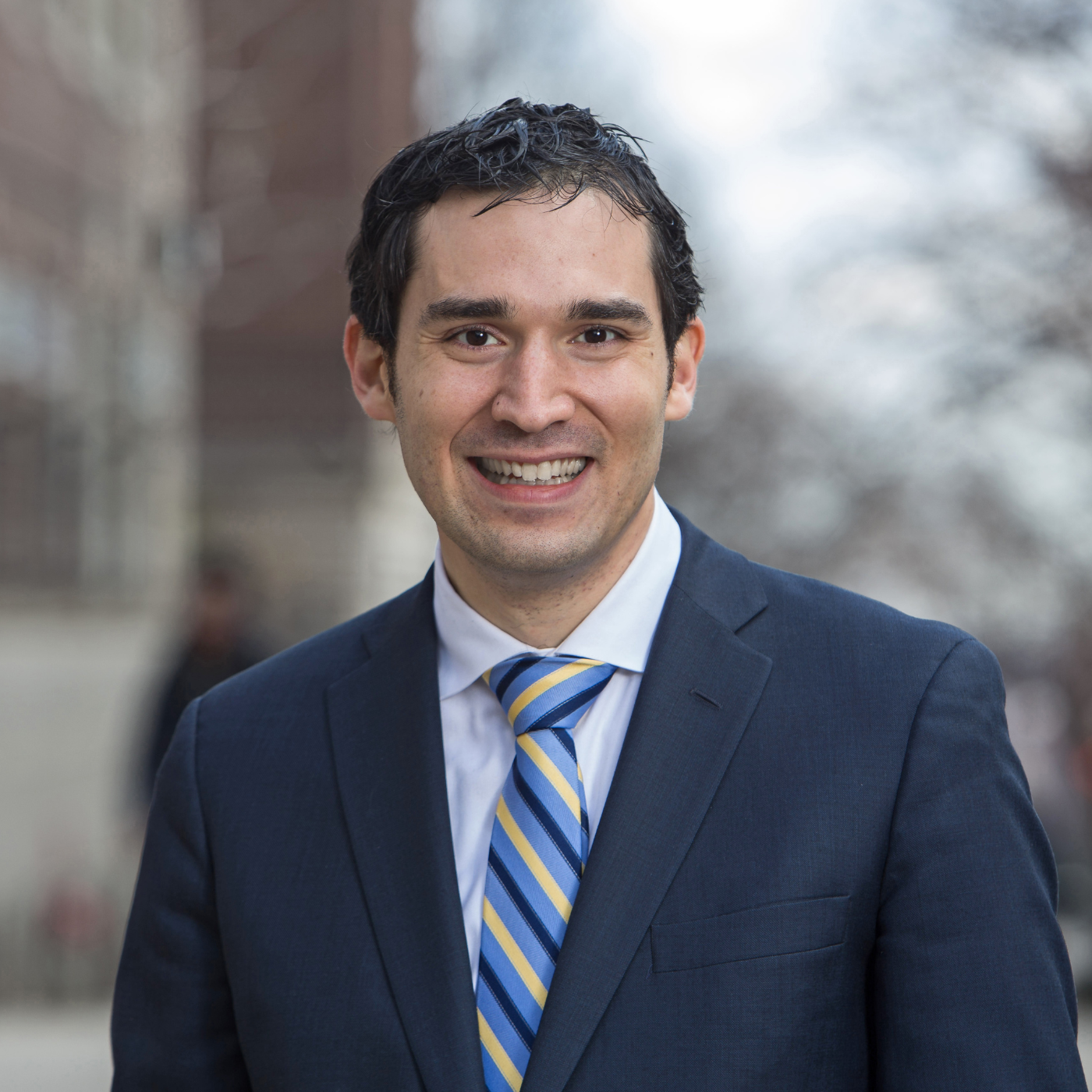
Interview with Prediction Market Researcher Dr. Joshua Mitts
Nick VinZant 0:12
Welcome to Profoundly Pointless. My name is Nick VinZant. Coming up in this episode: Market Manipulation.
Dr. Joshua Mitts 0:20
These contracts are really specific. What they're really doing is opening up new ways for people to put their money at risk. Unfortunately, you know it's generally the case with crime that the criminals who are dumb enough to get caught are the ones who are caught, and so this probably is only the tip of the iceberg. There's really a point where you want people to be making decisions based on their best judgment for what's good for the country, not based on you know, not even affected by will they personally profit.
Nick VinZant 0:53
I want to thank you so much for joining us. If you get a chance, subscribe, leave us a rating or a review. We really appreciate it. Really helps us out. So in our last episode, we looked at prediction markets, what they are, and why they have suddenly skyrocketed in popularity. In this episode, we're going to look at how people are manipulating those markets with someone who studies exactly how. This is Dr. Joshua Mitt, starting essentially with the basics. What is a prediction market?
Speaker 1 1:27
So a prediction market is just like a gambling establishment, but instead of betting against the casino, you're betting against other players, other market participants who are taking the opposite position that you are?
Nick VinZant 1:44
How can prediction markets be manipulated?
Dr. Joshua Mitts 1:47
So there's a lot of different ways, and that's the reality of a market. So the simplest of all is you can just drive up the price or down to where you think it's advantageous for you. So some people have said this might be a problem with elections. You know, elections are one of the biggest markets that people trade in on prediction markets because you can drive those prices in one way or another with enough money. And there have been some wild cases of manipulation. You know, there was one famous case where on a weather contract of the kind I was describing. Someone actually went out, and I remember if it was a hair dryer, or they put they put some heat source on the thermometer that was being used to measure the weather contract, just to get the payoff in the direction they wanted to get it to close as a as a as a yes contract. There was a special forces soldier who was indicted for trading on an operation in which he was participating for the removal of Venezuelan President Maduro. This soldier made a half a million dollars and was indicted for using that information, classified information, to profit. Now, some people would say, "Look, that's not manipulation. You're just actually taking advantage of a secret that you have, there are some interesting twists there. For example, Congressman George Santos was just banned from Kalshi for placing a bet on whether he would attend the State of the Union, and he actually bet against his own attendance and then didn't show up at the State of the Union address, is it
Nick VinZant 3:22
the kind of thing that ultimately comes down to manipulating knowledge in one way or another?
Dr. Joshua Mitts 3:27
These contracts are really specific, and so what they're what they're really doing is opening up new ways for people to put their money at risk or to profit in very, very, very narrow circumstances, and so this is this is hyper risky in that essentially you're going in to a contract if you're participating in one of these markets where someone might have all the incentive, all the power, all the information to basically take advantage of you, and so you have to wonder, you know, when there's a manipulator, there are the manipulated, and who is out there who's basically providing the cash to the ordinary users of these platforms, who often don't realize that there's someone there who's making the money, and their money, their losses are translated into winnings, but often for a very small fraction of users, so there's just a typically a very small, very small studies have found under 1% of the users of these platforms are basically pocketing most of the winnings.
Dr. Joshua Mitts 4:33
I
Nick VinZant 4:33
didn't realize it was that shifted to one side.
Dr. Joshua Mitts 4:38
Absolutely, in fact, there was a there's a Wall Street Journal study which found, and I'm I'm just going off of memory here, but I think it was around 70% of the of the users on these prediction markets lose money. But when you look at the winners, as I said, something like it might even be less than 1/10 of 1% is where the vast majority of profit. Are concentrated, so this is a very rigged game in favor of those very small number of participants who have either an informational advantage or they have some kind of modeling, statistical modeling, or data that others don't have. And I'll just say some of it's totally legitimate. I mean, there are people out there who were knocking on doors in rural counties and figuring out who's going to win an election in a local district. So I'm not suggesting that in every case there's something unethical about there being winners and losers. But if you're going to participate in these markets, you should know that in many cases this is sort of an extreme version of the house always wins. You know, you're you're basically going to find yourself on the losing end almost certainly in in many of these markets.
Nick VinZant 5:48
Do you think though that then will that ultimately cause this to crash? Like, is the prediction market something that can just be so manipulated that even though it's the flavor of the month, will it crash when people figure this out?
Dr. Joshua Mitts 6:03
That that's that's literally the you know billion dollar question. I mean these these these markets are very large. These companies are continuing to grow. There is, I would say, if you zoom out, a kind of speculative trend right now, meaning society, U.S. global globally, not only in the United States but globally, there's just much more risk taking than we've seen historically. Some have said this is similar to the 1920s before the Great Depression, and and I think this plays to our kind of cognitive bias in a way. This idea that we believe, all of us believe in some, and I think at some level that if we participate in this, that maybe we're better than we are, or we think that you know we we can actually come out ahead. And this kind of gambler's fallacy that you think you're going to win, even if you've been losing, you're sure a win is coming. I think that's that's very common, and it's essentially driving a lot of the demand for participation on these platforms, so I think it's a broader question as a society, like why we're comfortable gambling as much as we are, and you know what that says about where people are. Some would point to inequality, some would point to cultural factors. I'm I'm not an expert on that question, but I do think that this demand is broader than the specific markets, it's really a broader societal level thing, and the prediction market platforms are kind of riding the wave.
Nick VinZant 7:28
So we talked about this a little bit already, but how much money do you think is being manipulated?
Dr. Joshua Mitts 7:35
One of my papers looks at this, and under a series of statistical criteria, which have lots of caveats, you know, we we we're looking at over $100 million of potentially informed trading. But you asked about manipulation, and the reality is, a lot of that informed trading is going to reflect hard work, where people get out there and they build a model and they try and figure out what's going to happen. And I I don't know that that's really manipulation. I think that's kind of how these markets are supposed to work at some level, but but there's some small fraction at least of of this which very well could reflect illegal activity, and we're seeing lots of investigations right now. Prosecutors are looking really closely at these markets. The the various financial regulators are looking at these markets. States want to get in on the action, so I think we'll have a better sense after some of this enforcement and regulatory activity kind of shakes out. We'll see more cases being brought. If you want a rule of thumb, you know, you can go back to the special forces operator I gave that example. You know, he made a half a million dollars, and so you know that was one individual in one case, a fairly extreme case, someone who had access to classified information and bet against the entire market because he knew something nobody else knew and made a half a million dollars. So is this a massive amount of money at a societal level? Not really, but is it life changing cash for the people who are involved who can figure out potentially, and and you know that means there's a strong incentive, and that's one reason we might be concerned about this because we don't want special forces soldiers out there, you know, making decisions based on not necessarily what's in the best interest of the mission and the operational considerations, but based on their poly market or cow sheet profile, you know that would be a not a great world to live in.
Nick VinZant 9:28
The thing that I always go back to is betting on the color of the Gatorade at the Super Bowl, and to me, that's a fun bet. Like you're just messing around; it's not too serious. But I suddenly feel really differently about it if I'm unknowingly betting against the person who makes the Gatorade at the Super Bowl. Do prediction markets kind of create these circumstances where people can have a unique advantage that they would not have had before?
Dr. Joshua Mitts 9:56
Absolutely, and and you know some of the time you're. Betting against other sophisticated market players. I mean, that's that's a very important point here. That not everyone who participates in these markets is innocent. Sometimes you're betting against very sophisticated Wall Street algorithms, which are trying to take advantage of you just as much as you're trying to take advantage of them.
Nick VinZant 10:21
Looking at some of your research, you found that from a two-year period, February 2024 to February 2026, found 210,000 suspicious bets. Are there categories of those bets that seem more suspicious to others? And what I mean by that is, okay, they were mainly in the political realm, they were mainly in the sports realm. They were mainly in celebrities. Are there certain categories that seem to lend themselves to this more than others?
Dr. Joshua Mitts 10:48
There are some categories which are much more suspicious than others, particularly in the areas of, for example, geopolitics, or where there's some sort of underlying event that very few people like the Maduro case. Very few people are supposed to know about, or it might be classified or otherwise very tightly held.
Nick VinZant 11:08
When you look at the market manipulation, right? Is it big fries or small fries? And what I mean by that, in the sense, is does the person or the people who seem to be manipulating and are engaging in this in these acts. Is it the CEO of the company that knows the release date for the new Zelda game who's doing this, or is it more? No, it's just some low-level staffer that happened to find out and put a bet on that.
Dr. Joshua Mitts 11:37
The pattern is more the foot soldiers, the people who are involved operationally in the underlying activity, who might be on the product team or this, you know, might be involved in the operation. But that seems to be where the trading activity is coming from. Now, that's in the case of exploiting inside information. Some of the more sophisticated schemes, you know, might very well have more, you know, sophisticated planning. But at the end of the day, if you're basically looking to make a quick buck off of some information you have that others don't have, you know, that's a huge risk for a CEO or president.
Nick VinZant 12:16
Yeah, it's risk reward, right? There's too much risk for somebody at the top. There's too much reward for somebody at the bottom. If that makes any sense, what do you think should be done about it?
Dr. Joshua Mitts 12:27
Some things are being done already. We're seeing some of the regulators stepping up and bringing these criminal cases, bringing civil cases. I mean, George Santos, who bet on his non-attendance at the State of the Union speech, was just banned from Kalshi a few days ago. Unfortunately, you know it's generally the case with crime that the criminals who are dumb enough to get caught are the ones who are caught, and so this probably is only the tip of the iceberg. So, what to do about it? I think the initial instinct that a prosecutor has or a regulator has is let's go after the low-hanging fruit. Going forward, some of these problems just can't be solved through the kind of whack-a-mole. We're going to go after individuals. What you've really got to do is change the system. You've got to make the system better. You've got to get more information reporting. You've got to get more global coordination, and you know this is you know beyond my area. But in lots of transnational crime, when we've seen transnational crime prevention and fighting crime across borders, there's a huge component of international collaboration and cooperation. And so, what you need are law enforcement and financial authorities in different countries to unmask some of this activity.
Nick VinZant 13:46
Are you ready for some harder slash listener submitted questions?
Dr. Joshua Mitts 13:50
Sure. Is
Nick VinZant 13:50
this really any different than what we have seen in the past in terms of people rigging gambling or people insider information in the stock market? Like, is this same thing new day or is this no this is fundamentally different.
Dr. Joshua Mitts 14:05
It's it's kind of both in that at some level the phenomenon is the same phenomenon it's the same behavior, but the scope of the problem is much broader and the opportunities to make money are much more. There's many more of them, so it is in some ways the same problem, but you might say it's the same problem. You know, on steroids, it's it's magnified many times over.
Nick VinZant 14:27
What cases really stand out to you? Like which ones jumped out in that? Oh, I can't believe they did that.
Dr. Joshua Mitts 14:34
It's funny because some of the some of the headlines. I mean, we talk about the Taylor Swift engagement, and there was a very, very well-timed trade on her announcement of her engagement. I mean, there's sort of there's sort of cases like this which are very culturally salient, which is kind of interesting because you would think that you know it's sort of like of all the things people would be betting on, why would pop culture? Features so heavily, but yet pop culture is a place where people are out there risking their money, and it turns out that you know some have advantages that others don't have. I mean, I think the greatest area of concern, and you know, I think about as a professor, I think about what should matter to society, where should we be focusing? Really, the the the geopolitical and political markets, the military markets. This is where I would be the most concerned because the incentives. You know, these are very serious topics, like whether or not we're going to go to war or not, and the concern that someone might be making those decisions, or might be influenced even just a little bit by the financial reward to a position on a prediction market. I would just, I would just be very worried about that. You know, I think as a society we should really ask: Do we want this this much gambling? I mean, there's there's really a point where you want people to be making decisions based on their best judgment for what's good for the country, not based on you know, not even affected by will they personally profit?
Nick VinZant 16:10
Can people protect themselves from this on an individual level? Like somebody wants to really participate in these prediction markets, what can they do to ensure that they're not betting on something that might be manipulated.
Dr. Joshua Mitts 16:26
Well, one thing you can do is look at the market, do some homework into you know who's traditionally made money. This information is usually available through the platforms. There are there are new products. I mean, the one thing this has really led to is a growth of kind of new companies which are out there doing this sort of prediction market intelligence, and they're able to give analysis. and You might want to look at some of that analysis and understand how toxic is the environment, is the market that you're thinking of trading in. Also, some areas, as as we said before, some of the markets are just much harder to manipulate than others. So you should really think about who you know who's involved in the trading, how many people are participating, how much volume is there, what are the odds that you're going to find yourself essentially on the losing end of of a very sophisticated actor who has access to many multiples of money than you do, and is willing to deploy that cash to move the market in a particular direction or to take advantage of information that they have. Just to give one example, you know, a lot of people are out there trading crypto, and there was just a new paper which came out recently, which found that on the prediction markets, you know, there are these markets which pay off if Bitcoin goes up or down within 55 or 15 minutes, and that those markets tend to be manipulated by people who are trading Bitcoin in the Bitcoin market. And so the prediction market that's linked to Bitcoin is actually manipulated by people who trade in the Bitcoin market in the crypto markets.
Nick VinZant 18:00
Last question for me: What do you think is the next shoe to drop? Like, what do you think happens moving forward?
Dr. Joshua Mitts 18:06
I think we're likely to see more markets emerge, and you know that's going to create even more opportunities for making money, but also more opportunities for losing money and more opportunities for manipulation and the sort of insider trading. So I think you know this is this is kind of a new frontier, and you know really the question the question is you know if you're if you're smart and again some of your listeners may listen to this and think well this is awful others might say look there's an opportunity here the opportunity is to figure out how to safely navigate these markets. How can I take advantage of these markets, or how can I profit in these markets?
Nick VinZant 18:46
I want to thank Dr. Mitz so much for joining us. If you want to connect with him, we have linked to him on our social media sites. We're Profoundly Pointless on TikTok, Instagram, and YouTube, and we've also included his information in the episode description. Thanks for joining us. Catch you next time.