
In every language there are words you just don’t say. They can be about sex, religion, food or even your mother-in-law.
In this episode of Profoundly Pointless we explore the fascinating history and controversial present of language taboos with Professor Randall Eggert.
We talk the biggest current language taboos, historical language taboos and language taboos that are forming today.
00:00 Introducing Professor Randall Eggert
01:28 Language Taboos
06:03 The Biggest Language Taboos
08:33 Language Taboos that Have Faded Away
11:53 Historical Language Taboo
13:58 The Next Language Taboo
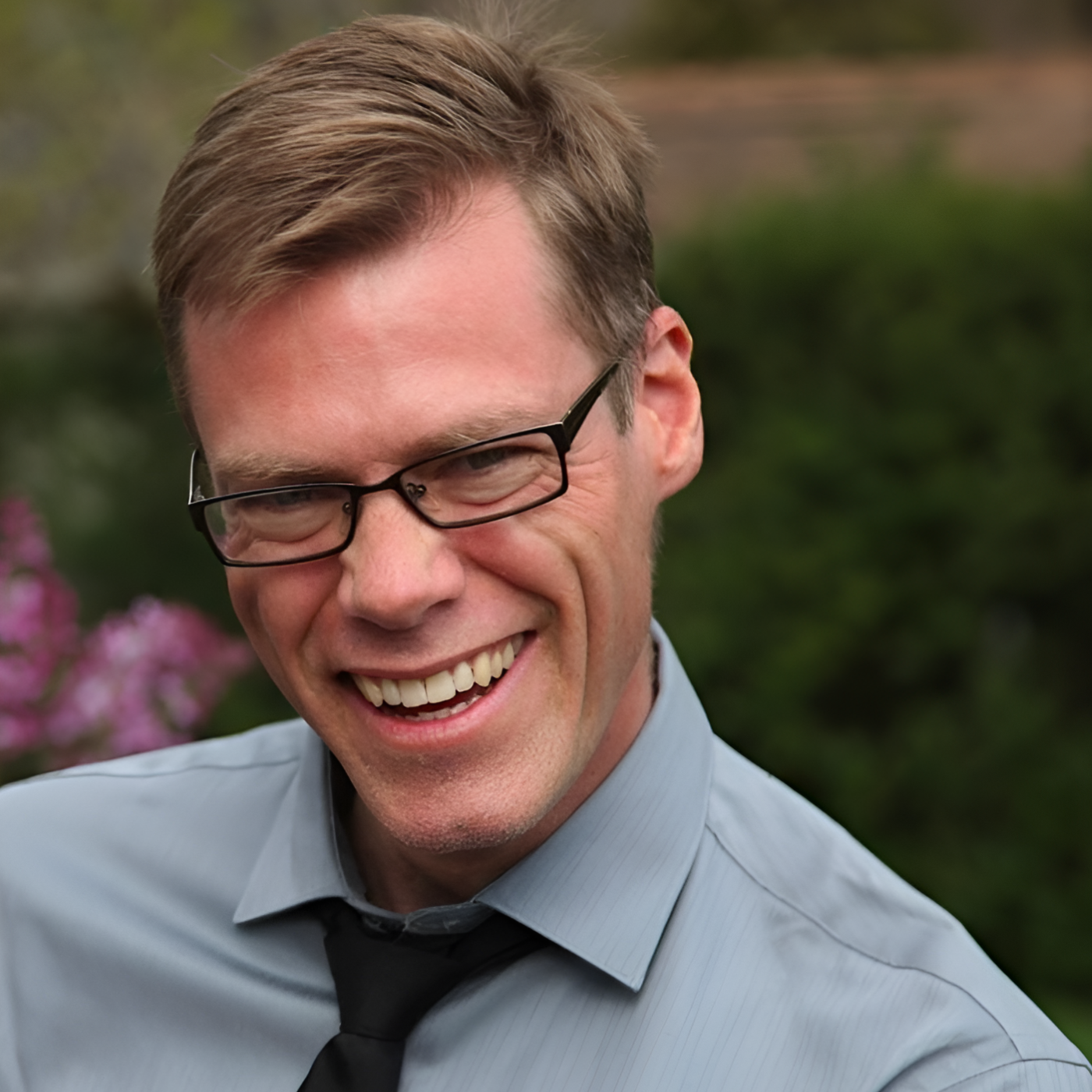
Interview with Language Taboo Expert Professor Randall Eggert
Nick VinZant 0:12
Welcome to Profoundly Pointless. My name is Nick VinZant. Coming up in this episode, language taboos.
Randall Eggert 0:20
Names like naming practices, rather. There's a lot of taboos around them, like who you can call what. We can look back to the 20th century of people trying to normalize sex words. So you know there was all sorts of censorship you see on the word "fuck oaths. Some of the worst taboos you could have is giving your word on something insincerely.
Nick VinZant 0:52
I want to thank you so much for joining us. If you get a chance, subscribe, leave us a rating or a review. We really appreciate it. Really helps us out, so we're going to do something in this episode that we've never done before. We're going to have a part two. So in our last episode, we had on Professor Randall Egert, and he talked about the history and meaning of swear words. Well, he also studies language taboos. So here again is Professor Randall Egert talking specifically about things you just don't say. What makes a word taboo?
Randall Eggert 1:31
Any taboo has to be rooted in culture. So there are certain things in our cultures that you know we find problematic. Death is is one of the most problematic things we've got. So it's not surprising that certain things related to death are going to be tabooed. Suicide might be one of them. If you look in obituaries, when somebody commits suicide, we generally avoid the word. Used to be apparently that cancer was similar. That if somebody died of cancer. You didn't say that. You you said they died of natural causes, and everybody inferred from that that you meant cancer. Sex. We have a lot of taboos around sex. We have a lot of taboos around you know bathroom activities. Food is a very common cultural taboo. There's all sorts of cultures that have, you know, certain foods that are forbidden, and you know, certain practices around food that that are forbidden. Money is a really big taboo in a lot of cultures. You know, I I don't know about you where you come from, but you know, my the way I was brought up, we don't talk about money, and I didn't even recognize I live I was living in Budapest right after I graduated from college, and I would go to parties and like one of the first questions somebody would ask me when I was introduced was how much money do you make, and I was like wow that's a that's a terrible question and I was like you know I would dodge the question, and they would get annoyed with me and keep pushing. And so I said this to a friend. I'm like, "Why do they keep asking me this? Seems really rude. And and my friend looks at me and goes, "Why why does that bother you? That you know that's a normal question. And I started talking to her, and she's like, "Yeah, no, money's not a big deal. You know, it's it's kind of like asking a college student what's your what's your major. It's just a way of starting a conversation, and it's like, huh, okay, so that's that's clearly part of my culture. That's not part of your culture. But you know, certainly we find that that money in a lot of cultures is taboo.
Nick VinZant 3:38
Does it have anything to do with the words or the phrases around the word, or is it just like no? It's more about the culture surrounding that particular thing.
Randall Eggert 3:48
So there's some evidence, very weak evidence in my mind, that suggests that certain sounds are going to lend themselves to a swear word more than others. What linguists call stops, like ta, ka, pa, are more likely to be taboo words than other words. It's not perfect, you know. Certainly, you can find lots of counterexamples to it. So it's just a weak correlation. But there's some evidence to suggest that sounds may enter into it that doesn't change what I would argue is the fact that it's still arbitrary. That there's nothing special about the sounds "fuck" that led to us making that word taboo.
Nick VinZant 4:36
Are language taboos usually associated with swear words, or can you have a language taboo that has no bad words in
Randall Eggert 4:44
it? What I would say is that there are some really interesting ones where I can't point to any taboo words, but names like naming practices rather. There's a lot of taboos around them, like who you can call what. So you know, can you refer to your your you can you address your teacher by their first name or not?
Nick VinZant 5:08
That's like it's definitely when I was growing up, you referred to every adult by like sir or ma'am or their Mister and their last name, and then with my sons, they will refer to people by their first names, and my name obviously is Nick. And like one of my son's friends called me Nick, and I kind of whipped around like, "What? That's not no, no, no, no, no, no, no. Like I'm
Randall Eggert 5:35
mr. VinZant. You know, going back to naming, one of my favorite examples is an Aboriginal language in Australia. A man cannot talk, period, to his mother-in-law and vice versa. So there's just a taboo about that relationship, such that they can't talk. There's other rules about how you know what words you can use with your brother-in-law, your father-in-law, but with your mother-in-law, you can't say anything.
Nick VinZant 6:03
What would you say are the biggest language taboos?
Randall Eggert 6:07
I mean, the most obvious is is anything related to the bathroom. So, for example, imagine sitting at a at a dinner party, and you have to excuse yourself, and you you say to your you know, guests. Excuse me, I need to go squeeze some feces out of my colon. I mean, that's terrible, right? There's no taboo words there, but that's incredibly taboo.
Nick VinZant 6:31
Right. I don't want to know. Yeah,
Randall Eggert 6:32
exactly. So, you know, all of those categories are still taboo, even if you're not using the taboo words, you know you don't talk about sex with your mom, right? And it doesn't matter how much you, you know, use clinical terms while talking about it. It's just don't do it. There are taboo words derived from animals, but there are also rituals and and rules about talking about certain animals. Not not all animals are going to be tabooed, but you know, in certain cultures, dogs are considered unclean, and so it wouldn't be surprising that certain discussions around dogs are is also going to be considered unclean. There's a lot of word magic that we find in culture after culture, as much as we might think that we're kind of above that, you know, those superstitions, we're all prone to them, and so you, you know, talking about defecating, it's unclean the the actual act, and so in a sense, you know, we're soiling ourselves just by talking about
Nick VinZant 7:46
it. I am not what I would consider to be a prude in pretty much any way, but I don't want to hear about that. Like, I, I don't want, I don't want to know. What are some of the other big language taboo?
Randall Eggert 7:57
Religion. I mean, even just talking about religion can be highly taboo, and you know, and there's that kind of, you know, advice that you're given. Don't don't talk about religion. You don't talk about politics with people you don't know. So, you know, there's there's a lot of these things that are perhaps fraught that we don't talk about. I mean, I think every time you know I get in a conversation with somebody and politics come on, come out, you know, or we start talking about politics, there's always that moment where you're kind of navigating, you know, what can I say in front of this person, what can't I say?
Nick VinZant 8:33
Are you like me or are you not like me? Right? Yes. Do you have the same opinions that I do? Are there any language taboos that have become more acceptable to talk about, like, oh, you didn't used to talk about this at
Randall Eggert 8:45
all. The one I can think of is menstruation. I think there's been a concerted effort to take some of the taboo away from that. I recall when when I was young, you know, you did not see ads for tampons on TV. You did not see ads for tampons in magazines. That was just not acceptable. And I think you know more and more people are are comfortable talking about menstruation. I think anything related to homosexuality, we've certainly opened that up. You know, I look back at Lenny Bruce, who was thrown in jail for saying the word "cocksucker. You wouldn't get that today.
Nick VinZant 9:33
Is there a pushback against those kind of things?
Randall Eggert 9:38
Absolutely. I mean, we can look back to the 20th century of people trying to normalize sex words. So you know there was all sorts of censorship you see on the word fuck. So for example. Who's the author of *The Naked and the Dead* Norman Mailer. He wasn't allowed to say "fuck" in his novel about World War II. So, you know, I mean, there's all these graphic scenes of people dying and stuff, and you know, not surprisingly, soldiers swore. We all know that. But in the novel, he couldn't write the word "fuck, and so his editors forced him to write "bug" everywhere that he would have written "fuck. I think back on the word "Catholic. That was a euphemism. That was it. It was an invented word because the earlier word for a Catholic was "popist. You know, that came from Pope, and that was just a normal word until Anglicans started using it so often as a derogatory term that Catholics couldn't call themselves popists, and so they had to find a new word. You know, you you mentioned that you don't consider yourself a prude, and you know, I was teaching this course, and I thought, well, you know, I'm, you know, I'm I'm immune to it. Nobody's going to find a way to really offend me at this point. And then I was, you know, like doing some work in my backyard, and I heard these kids out in the alley, and one of them was talking smack to the other, and this was just a few years after 9/11. And he said, "I'm going to take you down like the twin towers, and I was like, "Holy crap!
Nick VinZant 11:32
Wow! Like
Randall Eggert 11:33
that is awful! And I was so mad, and I'm finding myself just like, and I was like, "Okay. He found a way to push my button, so yeah. I mean, you're gonna find a way.
Nick VinZant 11:47
Are you ready for some harder slash listener submitted questions about taboos?
Randall Eggert 11:51
Absolutely.
Nick VinZant 11:53
Biggest historical language taboos?
Randall Eggert 11:56
Oh, I think that's probably the the one I can think of the the most is if you go back in, you know, like old English, that some of the worst taboos you could have is giving your word on something insincerely, and that was the highest taboo because at that time there was no way of holding holding people accountable. There wasn't a court system. There wasn't any of that, and so all you had was your word, your honor. And if you didn't take that seriously, that was bad. You know, that was a really bad thing. We don't have that today. We don't have words that have that much strength to them that people understand you wouldn't say that unless you really really meant it. Even things like "I swear by my mother's grave" doesn't have the power that it once had.
Nick VinZant 12:54
Are there any other ones that you would say have changed like that?
Randall Eggert 12:59
I mean, certainly, if you look in, you know, developed countries especially, but I think in most cultures, animal taboos are really not that strong anymore. You find a few here and there. You know, some of them are probably more religious oriented. Excuse me. So, for example, in Spanish, you've got a number of porco expressions, porco dio, porco moda. So basically, pig. You put pig in front of these religious words, and it makes them worse. But I think historically, animal taboos were stronger if we go back in time. Words for wolf, words for bear have been lost to history because they were so bad that the euphemisms replaced them.
Nick VinZant 13:58
Are there any language taboos that you see coming?
Randall Eggert 14:01
I always have to preface this by saying that you know linguistics is not a predictive science, but I would guess, just judging by my children, I think there's some naming taboos that are in the works, and I don't know how they're going to manifest, but you know the taboos around dead naming are so visceral to my children that there's got to be some way the language is going to milk that emotion from them. You know, and you you see that to an extent that you know, as a way of really insulting somebody, like a somebody who's say transgender, using their dead name as a way of really triggering them. So I would think that that you're gonna we're probably gonna. More taboos related to naming. You know, names have always been somewhat fraught in the sense that, you know, who can say what name is culturally relevant. We talked about that a little bit with address forms, but there are languages, for example, where you can't say the names of ancestors who've died. So you have to find a way, you know, like if you've got a child that was named after a relative, and that relative dies, you have to change that child's name. So it's not that this is unprecedented, but I think it's manifesting itself in a different way than it than it has before. So to me, that that's the one thing I see on the horizon is that the way that children today, or you know, I guess they're not even children anymore, but Gen Z is so attached to naming and how names are are given and used, I kind of see something in the works there.
Nick VinZant 16:07
I want to thank Professor Eggerd so much for joining us. If you want to connect with him, we have a link to him on our social media sites. We're Profoundly Pointless on TikTok, Instagram, and YouTube, and we've also included his information in the episode description. See you next time. Well, I guess technically we don't see you, but hear you next time.
Unknown Speaker 16:29
You know what I mean.